
Doraemon: Nobita's Dinosaur 2006 - An In-Depth Look

Introduction
"Doraemon: Nobita's Dinosaur 2006" (Gekijoban Doraemon: Nobita no Kyōryū 2006) is a Japanese animated science fiction adventure film that holds a special place in the hearts of fans. As the 26th movie in the Doraemon franchise, it is a remake of the original 1980 film, "Doraemon: Nobita's Dinosaur." Directed by Ayumu Watanabe and written by both Watanabe and Kōzō Kusuba, this movie reintroduced audiences to the thrilling adventures of Nobita and his friends, capturing a new generation of viewers with its updated animation style and emotional storyline.
The film, which was released in Japan on March 4, 2006, became an instant hit, grossing over 3.28 billion yen and securing its place as the 6th highest-grossing film in Japan that year. It also made history by being the highest-grossing animated film of its time. With such a legacy, "Doraemon: Nobita's Dinosaur 2006" continues to be a beloved classic among both old and new fans of the series.
Release Date: March 4, 2006
Original name: Gekijoban Doraemon: Nobita no Curio 2006
Status: Released
Running time: 1hour 20 to 50 minutes approx
Director: Ayumu Watanabe
Writer: Ayumu Watanabe, Kōzō Kusuba
Movie Plot
The Story Begins
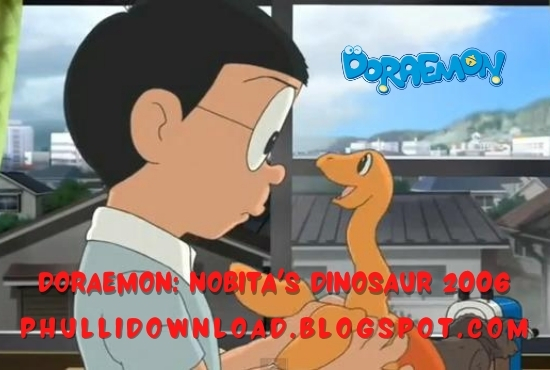
The movie kicks off with Nobita feeling frustrated and envious of his friends, particularly after his classmate Suneo shows off a fossilized dinosaur claw. Determined to prove that he can find a living dinosaur, Nobita embarks on a journey that leads him to discover a fossilized egg. Using one of Doraemon's gadgets, the Time Cloth, Nobita restores the egg to its original form and hatches it, revealing a baby plesiosaur, which he names Piisuke.
Growing Pains
Nobita’s excitement quickly turns into responsibility as Piisuke begins to grow rapidly. Nobita, with the help of his trusty robotic cat Doraemon, takes care of Piisuke, feeding him and playing with him. However, as Piisuke grows larger, it becomes increasingly difficult to keep him hidden, and Nobita is forced to move him to a nearby lake.
As the bond between Nobita and Piisuke deepens, so does the complexity of their situation. Nobita's friends, unaware of the dinosaur's existence, begin to grow suspicious, especially when Piisuke is spotted in the city. The tension builds as Nobita struggles to keep Piisuke safe while dealing with the pressures of keeping such a big secret.
A Race Against Time
The story takes a dramatic turn when Nobita, Doraemon, and their friends are forced to use the Time Machine to return Piisuke to the Late Cretaceous period, where he belongs. However, their journey is fraught with danger as they are pursued by time-traveling poachers who want to capture Piisuke for themselves. The group's adventure is filled with thrilling chases, narrow escapes, and emotional moments that highlight the themes of friendship, responsibility, and the passage of time.
In the end, Nobita must make the difficult decision to leave Piisuke in his natural habitat, realizing that it’s the best thing for his beloved dinosaur. The movie closes on a bittersweet note as Nobita and his friends return to the present, forever changed by their incredible journey.
Movie Script and Review
A Perfect Blend of Emotion and Adventure
The script of "Doraemon: Nobita's Dinosaur 2006" masterfully blends humor, adventure, and heartwarming moments, making it a perfect family film. The dialogue is simple yet effective, conveying the emotional depth of Nobita's journey and his growth as a character. The screenplay does an excellent job of modernizing the original 1980 story while staying true to its core themes, making it accessible to both longtime fans and newcomers.
The film's pacing is well-balanced, with enough action to keep younger audiences engaged and enough emotional resonance to appeal to older viewers. The characters are well-developed, with Nobita’s character arc standing out as he evolves from a timid, insecure boy to a responsible and caring friend.
A Visual and Auditory Feast
One of the standout features of the movie is its animation. The 2006 remake introduced a new animation style that was more vibrant and detailed than its predecessor. The landscapes of the prehistoric era are beautifully rendered, immersing viewers in a world that feels both fantastical and real. The character designs, while updated, retain the charm and simplicity that have always been a hallmark of the Doraemon series.
The movie's soundtrack, composed by Kan Sawada, complements the narrative perfectly. The music enhances the emotional impact of key scenes, from the playful tunes that accompany Nobita's antics to the more poignant scores that underscore the movie's dramatic moments.
Star Cast
The voice cast of "Doraemon: Nobita's Dinosaur 2006" is a mix of familiar and new voices, all of whom deliver exceptional performances:
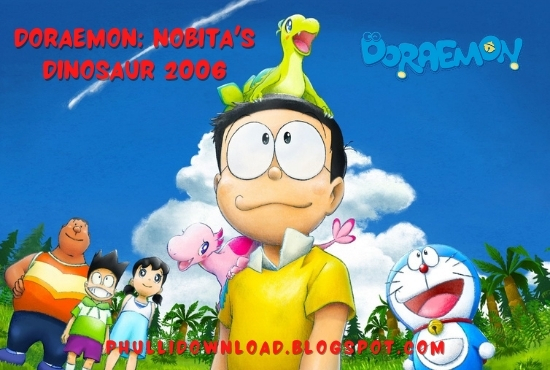
Doraemon: Voiced by Wasabi Mizuta, Doraemon's character is as endearing as ever. Mizuta brings warmth and humor to the role, perfectly capturing the essence of the robotic cat.
Nobita Nobi: Megumi Ōhara voices Nobita, conveying the character's innocence, determination, and emotional depth. Ōhara's performance is both touching and believable, making Nobita a relatable protagonist.
Shizuka Minamoto: Yumi Kakazu voices Shizuka, bringing grace and kindness to the character. Shizuka remains the voice of reason in the group, and Kakazu's performance highlights her gentle nature.
Takeshi "Gian" Goda: Subaru Kimura provides the voice for Gian, capturing his tough exterior and soft heart. Gian's character adds both humor and tension to the story, and Kimura's portrayal is spot-on.
Suneo Honekawa: Tomokazu Seki voices Suneo, the group's braggart. Seki's performance brings out Suneo's mischievous side, making him both a foil and a friend to Nobita.
Piisuke: Ryūnosuke Kamiki voices Piisuke, the baby dinosaur. Despite having limited dialogue, Kamiki's performance makes Piisuke an adorable and memorable character.
Doraemon Cartoon Movie: Doraemon: Nobita's Dinosaur 2006 Story:
At the beginning of the film, Tsuno shows everyone a fossilized claw of Tyrannosaurus rex (a species of dinosaur), and only then does Nobita get so angry that he can't get a look. Nobita claims to his friends that he will be able to find a living dinosaur. Panicking researches the fossils of Nobita dinosaurs and begins digging into a hill to search for more information. But after some time the owner of that land yells at those people and digs a hole in the ground to lay some eggs. Only then does Nobita find a shape near a rock that is egg-shaped. Using a time-wrap gadget, he returns the rock to its former form and plans to hatch the egg. He keeps the egg tightly wrapped in a blanket with his blanket day and night so that the plan to hatch the egg succeeds due to the heat.
A Plesiosaur Futabasaurus dinosaur emerges from that egg, and Nobita decides to name the Plesiosaur dinosaur Piiesuke. Tsuno and Jian arrive there in search of Nobita, but due to Piiusuke being too young, Nobita does not show him the plesiosaurs and instead makes a pact with him. If he can't show them the real dinosaur, he has to eat spaghetti through his nose, which is very challenging. Meanwhile, a strong bond begins between both Nobita and Piiusuke, working very hard to ensure that the baby Piusuke Plessissore is well cared for, feeding him Shasimi for his dinner, and Play with him He feels very attached to Piisuke himself.
Slowly, Piiusuke becomes too big to be in Nobita's cell and has to be taken to a lake. On the same day, Nobita comes to meet him every night, brings food for him, and plays with him. However, when Nobita becomes ill during the day and is unable to do so that night. Doraemon tries to feed Piiusuke in place of Nobita but comes back home stating that Piiusuke is gone. However, as soon as it is known, Nobita comes out in search of Piiusuke and finds him. Nobita is very angry about why Piusuke came to town, but he does not get angry for long. Doraemon sees that Nobita is fine, and Doraemon takes Piiusuke back to the lake. However, the next day when Nobita goes to meet him, he hears that Piiusuke was seen in the city and when he goes to the lake, he sees and encounters a crowd of journalists.

Facts and Figures
- Release Date: March 4, 2006, in Japan.
- Running Time: Approximately 1 hour 47 minutes.
- Box Office: Grossed over 3.28 billion yen, making it the 6th highest-grossing film in Japan for 2006 and the highest-grossing animated film of its time.
- Awards: The film was highly acclaimed and received several awards for its animation and storytelling.
- Doraemon’s First U.S. Appearance: The film had a private screening in Washington, DC, on November 14, 2008, with English subtitles, marking Doraemon's first appearance in the United States.
Doraemon Movie Legacy
"Doraemon: Nobita's Dinosaur 2006" not only revitalized a classic story for a new generation but also set the stage for future Doraemon films. The movie's success demonstrated the enduring appeal of Doraemon and solidified the franchise's place in Japanese pop culture. The film's influence can be seen in subsequent Doraemon movies, which continued to explore new animation techniques and storytelling approaches.
The sequel to this film, "Doraemon: Nobita's New Dinosaur," was released on August 7, 2020, further expanding on the themes introduced in the 2006 movie. The continued popularity of Doraemon movies underscores the timelessness of the characters and their adventures.
Conclusion
"Doraemon: Nobita's Dinosaur 2006" is a heartwarming and exciting film that continues to captivate audiences. Its blend of humor, adventure, and emotional storytelling makes it a standout in the Doraemon series. Whether you're a longtime fan or new to the franchise, this movie offers a perfect introduction to the world of Doraemon.
For those interested in watching "Doraemon: Nobita's Dinosaur 2006," the movie is available for download on various platforms, including in Hindi. The film remains a must-watch for anyone looking to experience the magic of Doraemon and the enduring appeal of Nobita's adventures with his friends.



Please Share it with your family and friends